The Plan
Why 7 Days Is the Magic Number
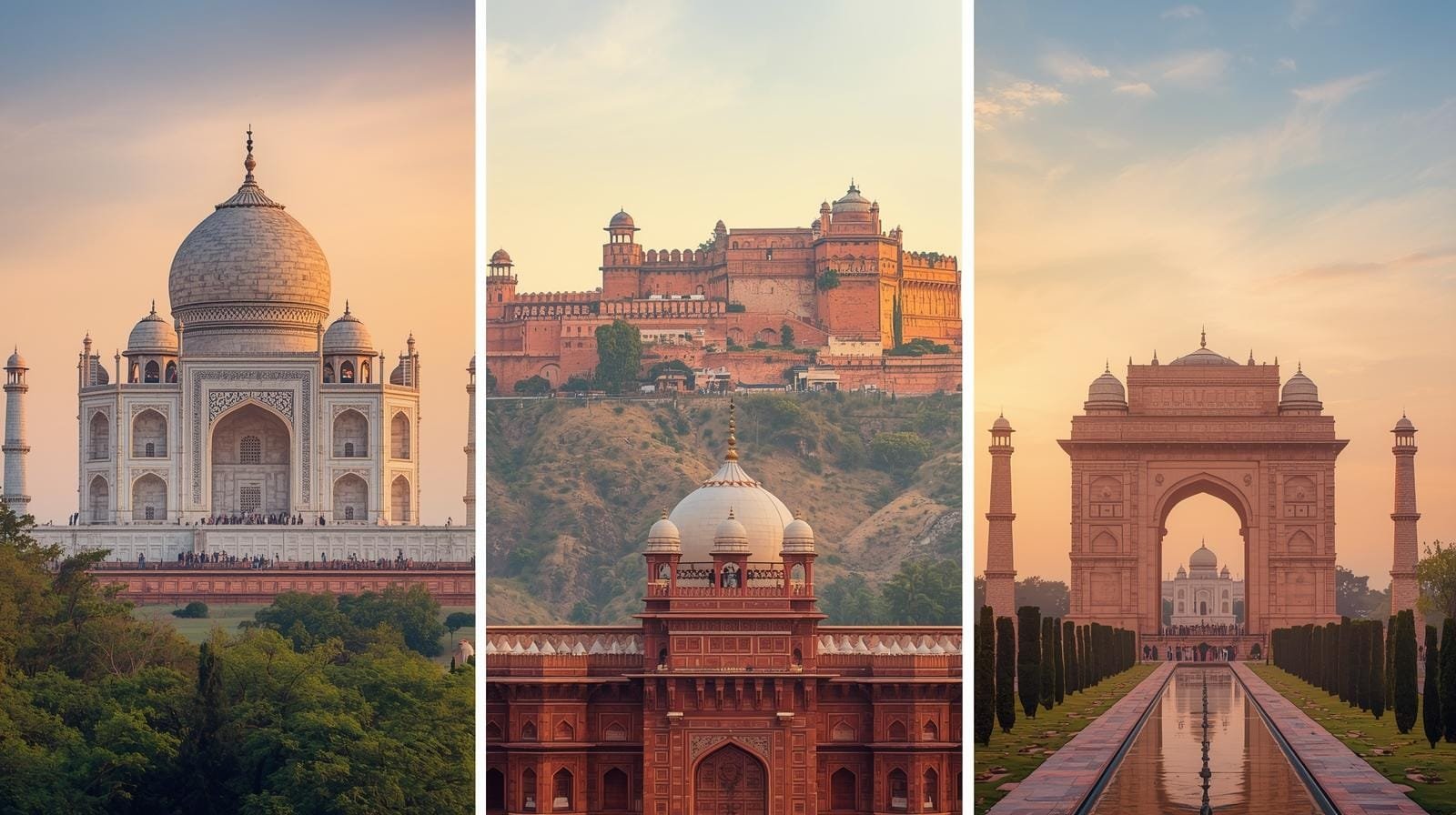
Five days is doable. Ten days is luxurious. But seven days is the Golden Triangle at its best — enough time to breathe, wander, and actually absorb what you're seeing without the blur of a rushed itinerary. You arrive in Delhi, spend two and a half days in the capital, move to Agra for the Taj Mahal, and finish in Jaipur before flying home.
This itinerary is built for international visitors who want to see the highlights without missing the details that make them memorable. It follows the classic Delhi → Agra → Jaipur loop, which ends in Jaipur — the city with the best onward flight connections back to Delhi's international terminal.
Delhi — Days 1, 2 & morning of 3
Old Delhi, New Delhi and the monuments that separate them. Red Fort, Humayun's Tomb, Qutab Minar, Chandni Chowk.
Agra — Afternoon day 3 & Day 4 morning
Agra Fort on arrival, Taj Mahal at sunrise, Fatehpur Sikri on the drive to Jaipur.
Jaipur — Days 5, 6 & morning of 7
Amber Fort, City Palace, Hawa Mahal, Jantar Mantar and the bazaars of the Pink City.
The Three Cities
What You're Travelling Between
The Golden Triangle isn't just three tourist stops — each city has a completely distinct personality, and understanding what makes them different helps you set the right pace for each leg.
Delhi
Capital · Megacity · 3,000 years of history
Delhi is vast, chaotic and magnificent. Eight cities built on the ruins of each other, from the Mughal Red Fort in the north to the colonial boulevards of New Delhi in the centre and the ancient Qutab Minar in the south. Give it time — first impressions rarely do it justice.
Agra
Mughal Capital · Taj Mahal · Yamuna River
Agra exists in the shadow of the Taj Mahal — and that's not a complaint. The city is smaller and grittier than Delhi, but it punches far above its weight in monuments. Beyond the Taj, Agra Fort rivals anything in India, and the ghost city of Fatehpur Sikri is just an hour away.
Jaipur
Pink City · Rajputana · Forts & Palaces
Jaipur is the most photogenic of the three. Painted in Rajasthani terracotta-pink, it has a warmth that Delhi and Agra lack. Amber Fort alone justifies the journey — but add the City Palace, the Hawa Mahal and the textile bazaars and you have a city you'll find genuinely difficult to leave.
Day by Day
The Full 7-Day Itinerary
Times below are suggestions, not a schedule. Private travel means your driver and guide adapt to you — sleep in, skip something, linger longer. Use this as a framework rather than a timetable.
Arrival in Delhi
Delhi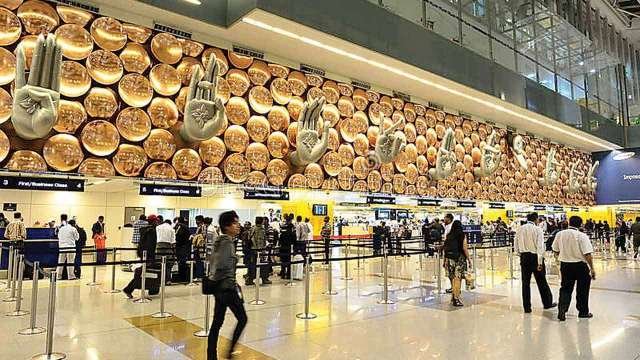
Day one is your transition day — landing, settling in and getting your first real taste of the city. International flights into Delhi often arrive early morning or late at night, so this day is deliberately light.
- Morning Arrive at Indira Gandhi International Airport (DEL). Your driver meets you at arrivals with a name card. Hotel check-in is typically noon — if you land before that, your bags can be stored and you can freshen up.
- Afternoon First orientation walk — India Gate and Rajpath. A gentle introduction. India Gate is walkable, open-air and gives you a feel for New Delhi's scale without being overwhelming. The Rajpath axis running towards Rashtrapati Bhavan is one of the great ceremonial avenues in the world.
- Evening Dinner in Connaught Place or Khan Market. Two safe, international-friendly options for your first night. Connaught Place has everything from North Indian thali to proper cocktail bars. Khan Market is quieter and upscale.
Old Delhi — The Mughal City
Delhi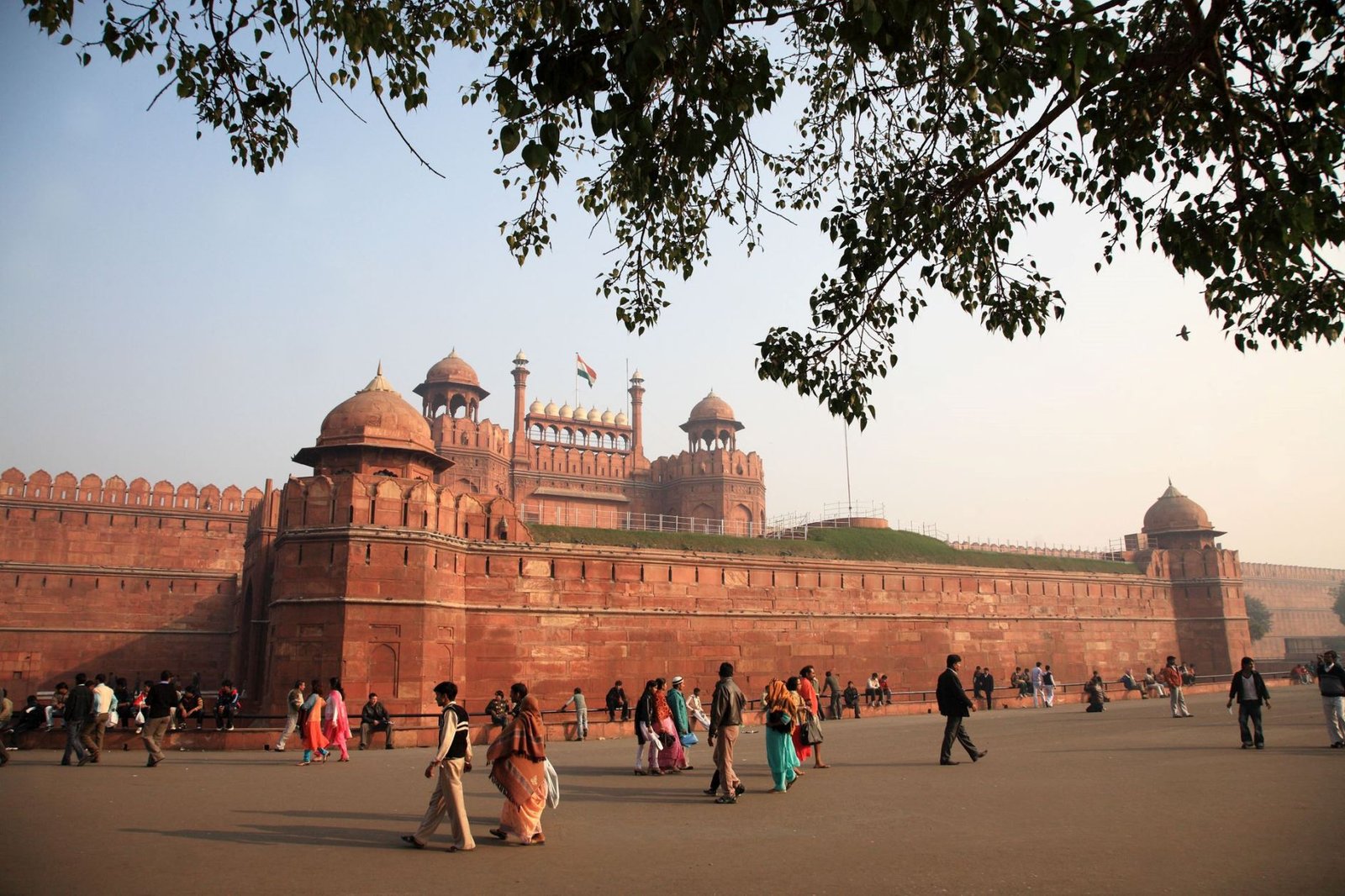
Old Delhi is the most intense experience on this itinerary — narrow lanes, ancient mosques, spice markets, cycle rickshaws and centuries of history packed into a few square kilometres. Go early, before the heat and the crowds build.
- 7:30 AM Red Fort (Lal Qila). Arrive just after opening to get the fort without the crowds. The massive red sandstone walls enclose a world of palaces, pavilions and gardens that the Mughal emperors ruled from for two centuries. Allow 90 minutes with a guide.
- 10:00 AM Chandni Chowk by cycle rickshaw. One of Asia's oldest markets — a riot of silver jewellery, fabrics, spices, street food and wholesale everything. Your guide knows which lanes to take and which stalls to stop at. Don't try to navigate this alone.
- 11:30 AM Jama Masjid. India's largest mosque, built by Shah Jahan — the same emperor who built the Taj Mahal. Climb the southern minaret for one of the best views of Old Delhi's rooftops. Modest dress required; scarves and covers available at the entrance.
- 1:00 PM Lunch break. Rest in your hotel or try one of Old Delhi's legendary food spots — Karim's near Jama Masjid has been serving Mughlai food since 1913.
- 3:30 PM Humayun's Tomb. The architectural forerunner to the Taj Mahal, and far less crowded. Built in 1570, it introduced the double dome and the charbagh (four-garden) layout that Mughal architecture became famous for. The gardens are immaculate in the late afternoon light.
- Evening Lodhi Garden or dinner near your hotel. Lodhi Garden is a quiet park dotted with 15th-century tombs — perfect for an evening walk after a big day. Dinner in Lodhi Colony or Hauz Khas Village.
South Delhi → Drive to Agra
Delhi → Agra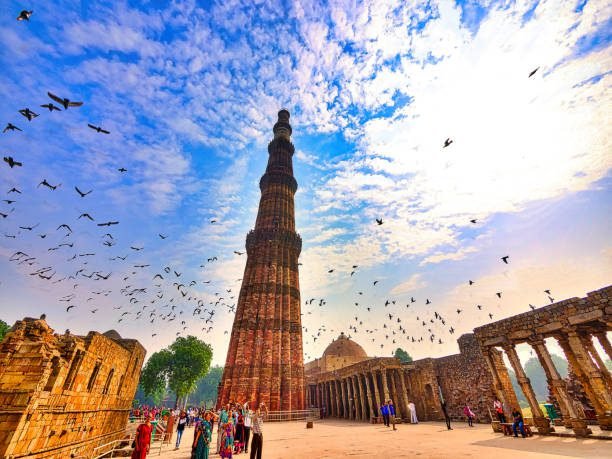
A half day in South Delhi's oldest monuments, then the four-hour drive south to Agra on the Yamuna Expressway. You arrive in Agra in the afternoon with time for Agra Fort before sunset — leaving the Taj Mahal for sunrise the following morning.
- 8:00 AM Qutab Minar. A 73-metre minaret built in 1193 — the tallest brick minaret in the world and a UNESCO World Heritage Site. The complex surrounding it contains some of the oldest Islamic architecture in India, including a mysterious iron pillar that hasn't rusted in 1,600 years.
- 10:30 AM Optional: Mehrauli Archaeological Park. Right next door, often skipped, rarely crowded. A kilometre of forested parkland with tombs and ruins scattered through it. Half an hour here is worth it.
- 11:30 AM Check out and depart for Agra. Your driver loads the bags and you join the Yamuna Expressway. The drive is smooth, mostly highway, and takes 3.5 to 4 hours with a stop.
- 4:00 PM Agra Fort. Check in to your hotel first, then visit Agra Fort in the late afternoon. The fort was the primary residence of the Mughal emperors before Shah Jahan moved the court to Delhi. From the fort's eastern ramparts, you get your first view of the Taj Mahal across the Yamuna — hazy, white, distant, and completely arresting.
- Sunset Mehtab Bagh (optional). A garden on the north bank of the Yamuna, directly across from the Taj Mahal. Sunset from here — the Taj turning gold then pink — is one of the great views in India and completely uncrowded.
Taj Mahal at Sunrise → Drive to Jaipur
Agra → Jaipur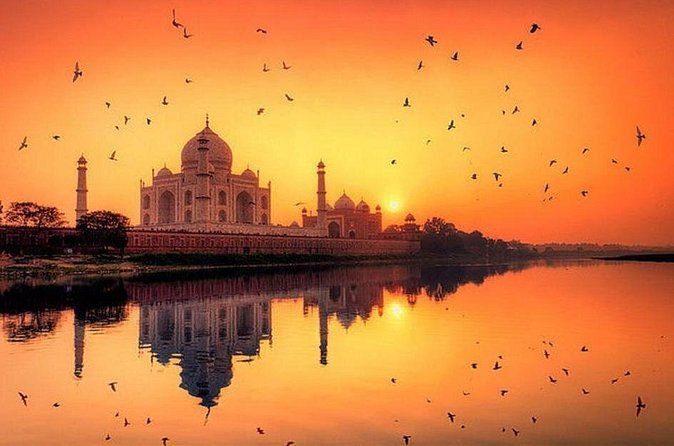
This is the day most people come to India for. The Taj Mahal at sunrise is one of the few experiences in travel that consistently exceeds expectations — the light, the silence, the slow revelation of scale as the mist burns off the Yamuna. Wake up early. It is worth it without question.
- 5:30 AM Depart for the Taj Mahal. Gates open at sunrise. Your guide and driver pick you up from the hotel — the gate is a short drive away. Arrive in the first wave of visitors before the day tour buses.
- Sunrise The Taj Mahal. Allow two full hours here. Walk the full forecourt, enter the main mausoleum, circle the plinth, sit on the famous Princess Diana bench. Your guide's commentary on the inlay work, the optical illusions built into the structure and the story of Shah Jahan and Mumtaz Mahal transforms it from a photograph into an experience.
- 8:30 AM Breakfast and check out. Back to the hotel for breakfast. Check out by 10am — you have a four-to-five hour drive ahead.
- 10:30 AM Fatehpur Sikri (en route to Jaipur). The abandoned Mughal capital, built by Emperor Akbar in 1571 and deserted seventeen years later — the reasons are still debated. Perfectly preserved, rarely crowded, and genuinely haunting. Allow 90 minutes. It sits directly on the Agra-Jaipur road.
- Afternoon Continue to Jaipur. Two to three hours of highway driving through Rajasthan. The landscape changes noticeably — drier, more ochre, with distant fortress hills appearing on the horizon as you approach the Pink City.
- Evening Arrive Jaipur, check in and rest. Your hotel is likely in or near the old city. Freshen up and take an easy evening walk around the lit-up Hawa Mahal or the bazaars on Johari Bazaar.
Jaipur — Amber Fort & Royal Palaces
Jaipur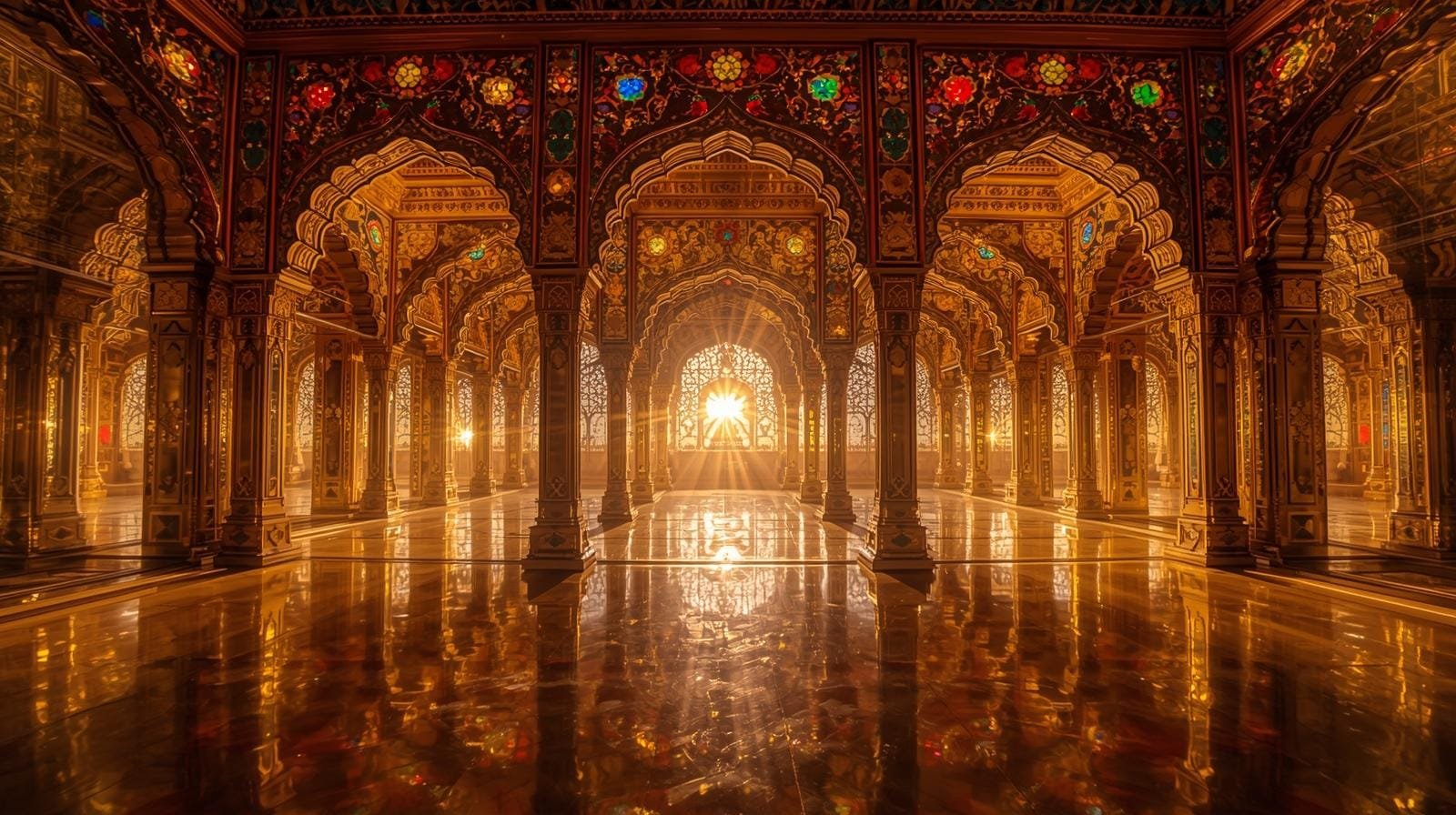
Jaipur's first full day is the grander, more monumental one — Amber Fort above the city, the City Palace at its centre, and the Jantar Mantar observatory beside it. These three sites alone represent centuries of Rajput power, and each one is significantly different in character.
- 8:00 AM Amber Fort. The finest fort-palace in Rajasthan, perched on a hillside above Maota Lake. Arrive early for the light and the cool. The Sheesh Mahal (Hall of Mirrors) inside is extraordinary — a ceiling covered in hand-cut mirror glass that reflects a single candle into a thousand stars. Your guide will tell you what you're looking at; without one, you miss most of it. Allow two hours minimum.
- 10:30 AM Jaigarh Fort (optional addition). Connected to Amber by an underground passage, Jaigarh sits higher on the ridge and houses one of the world's largest wheeled cannons. Fewer tourists and panoramic views across the Aravalli hills. Worth it if you have the energy.
- 12:30 PM Lunch break. The old city has excellent Rajasthani thali restaurants — dal baati churma, ker sangri, gatte ki sabzi. Let your guide recommend somewhere local rather than tourist-facing.
- 2:30 PM City Palace. The royal family still lives in a portion of this palace complex — an unusual reminder that Rajputana royalty is a living institution, not just a historical one. The Diwan-i-Am and Diwan-i-Khas halls are open to visitors, along with a superb textile and weaponry museum.
- 4:30 PM Jantar Mantar. Directly adjacent to the City Palace, this UNESCO-listed open-air observatory was built in 1728 by Maharaja Jai Singh II. The instruments are massive and they still work — your guide can explain how a 27-metre sundial accurately tells the time to within two seconds.
- Evening Hawa Mahal at dusk. The iconic pink façade of the Palace of the Winds is most photographed from the street opposite. In the early evening light, with the city noise and the colour of the stone, it's one of the most atmospheric views in India.
Jaipur — Markets, Textiles & Local Life
Jaipur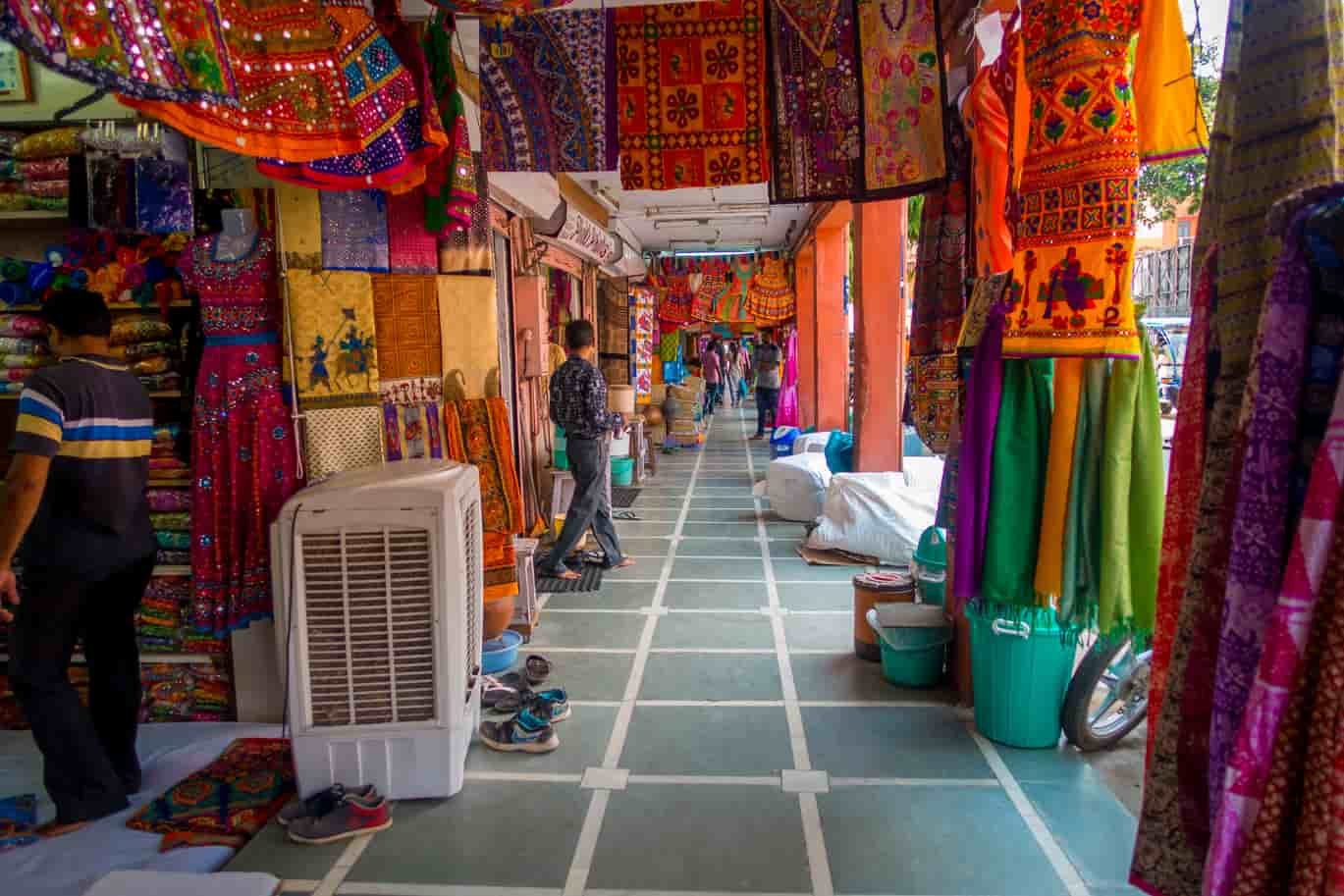
Day six is the slower, more personal day — the one you'll remember when the monument photographs start to blur. Jaipur is one of the finest craft cities in India: block-printed textiles, blue pottery, hand-cut gems and miniature paintings are all made here, and watching the artisans work is as interesting as the buying.
- Morning Block-printing workshop or gem-cutting visit. Sanganer, 15km south of Jaipur, is India's block-printing capital. A visit to a family workshop where you can watch and try the process takes about 90 minutes and costs nothing. Alternatively, a gem-cutting and setting workshop near the Johari Bazaar is equally fascinating — Jaipur handles an estimated 80% of the world's coloured gemstones.
- 11:00 AM Bapu Bazaar and Johari Bazaar. The two main shopping streets of the old city. Bapu Bazaar for textiles, jootis (hand-embroidered leather shoes) and bangles. Johari Bazaar for silver jewellery and gems. Your guide knows the reliable shops and will help you avoid the commission-heavy tourist traps.
- Lunch Rooftop lunch with fort views. Several old city rooftop restaurants overlook the Hawa Mahal. The food is secondary to the view, but the dal and the lassi are usually good.
- Afternoon Albert Hall Museum or Laxmi Narayan Temple (optional). The Albert Hall is Jaipur's main museum — an eclectic collection of art, arms and Rajasthani artefacts in a Indo-Gothic building. Laxmi Narayan (Birla) Temple is a striking modern marble temple on the edge of the old city, active and welcoming to visitors.
- Evening Farewell dinner in Jaipur. Your last night on the road. Several rooftop restaurants in the old city do Rajasthani thali and live folk music in the evenings — a fitting end to the Rajasthan leg of the journey.
Jaipur to Delhi — Departure
Jaipur → Delhi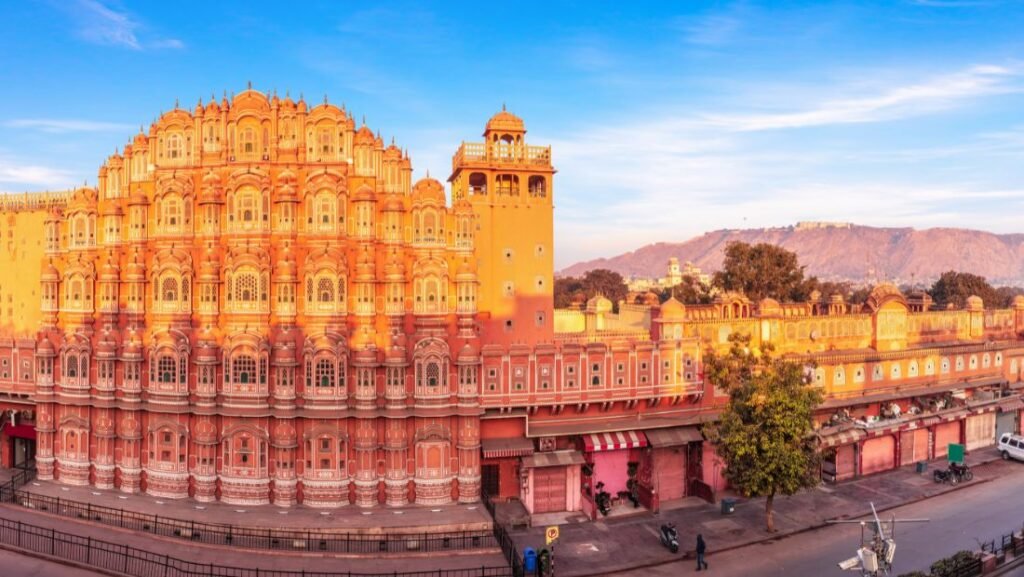
Day seven is your transition home — or onward to the next part of India. You have two options: fly Jaipur to Delhi (one hour, multiple daily flights), or drive, which takes about five hours and allows a stop at the Neemrana Fort on the way.
- Morning Option A — Fly Jaipur to Delhi. The Jaipur airport (JAI) has regular morning flights to Delhi (DEL). Journey time is under an hour. You can connect to an international departure from Delhi with plenty of buffer. Recommended if you have an evening international flight.
- Morning Option B — Drive Jaipur to Delhi via Neemrana. The drive south takes about five hours. Neemrana Fort, roughly midway, is a 15th-century Rajput fort converted into a heritage hotel — stop for lunch on the ramparts, one of the more memorable meals you'll have in India. Then continue to Delhi in the afternoon.
- Afternoon/Evening International departure from Delhi. Indira Gandhi International Airport is large and modern. Allow at least three hours before departure for international flights — immigration queues can be unpredictable.
Before You Go
Practical Information for International Visitors
🛫 Getting There
- All major US, UK and Australian cities have direct or one-stop flights to Delhi (DEL)
- US flights typically route via Dubai, Doha, London or Frankfurt
- UK flights are often direct — BA and Virgin fly Heathrow–Delhi non-stop
- Average flight time from NYC is 14–15 hours; from London, 9 hours
🚗 Getting Around
- Private car with driver is by far the most flexible option between cities
- Delhi–Agra: Yamuna Expressway, 3.5–4 hours
- Agra–Jaipur: NH21, 4–5 hours (allow extra for Fatehpur Sikri stop)
- Jaipur–Delhi: 5 hours driving or 1 hour flying
- Gatimaan Express train Delhi–Agra: 1 hr 40 min (fastest option for Agra day trip)
🌡️ Best Time to Go
- October–November: Post-monsoon, clear skies, warm days (22–30°C)
- December–February: Peak season, cooler days (10–22°C), possible Delhi fog in January
- March: Warming up, Holi festival in late March — excellent for Jaipur
- Avoid April–June (extreme heat, 40°C+) and July–September (monsoon)
🪪 Visas & Entry
- US, UK, Australian and Canadian citizens all require a visa for India
- e-Visa is available online — apply at least 4 days before travel, ideally 2 weeks
- Tourist e-Visa valid 90 days from entry for US, UK, AU and CA citizens
- Check the current India travel advisory before booking
💰 Budget Guide
- Private tour including driver, guide and mid-range hotels: USD $180–250/person/day
- Taj Mahal entry: USD $15 for foreign nationals (₹1,300 + ₹200 mausoleum supplement)
- Red Fort entry: USD $7.50 for foreign nationals
- Amber Fort entry: USD $10 for foreign nationals
- Tipping: USD $5–10/day for driver, $10–15/day for guide is customary
📱 Essentials to Pack
- Modest clothing for temples and mosques (shoulders and knees covered)
- Comfortable walking shoes — expect 8–12km of walking daily
- Indian SIM or roaming — Airtel and Jio have eSIM options for foreigners
- Cash in INR — many smaller markets and tips are cash only
- Sunscreen and lip balm — the November sun is stronger than it looks
Keep Exploring
More Golden Triangle Resources
Common Questions
Golden Triangle 7-Day FAQ
How many days do you need for the Golden Triangle?
Is the Taj Mahal closed on Fridays?
What is the best order for the Golden Triangle?
Private car or train between cities?
Do I need a guide for the Golden Triangle?
Is 7 days enough to also add Varanasi or Ranthambore?
Plan Your Golden Triangle Trip
Every itinerary we build is private, flexible and tailored to you — different pace, different hotels, different dates. Tell us when you're travelling and we'll put together a detailed proposal.
Start Planning →